

Microbial diversity in long-term dioxin-contaminated soil collected at Phu Cat Airport, Vietnam
Main Article Content
Abstract
Dioxin contamination remains a serious and persistent environmental issue in Vietnam, especially at historical hotspots such as Phu Cat Airport. This study investigated the taxonomic and functional diversity of microorganisms inhabiting hotspots long-term dioxin-contaminated soil using metagenomic sequencing and enrichment-based isolation approaches. Shotgun metagenomic sequencing generated 50,349,630 high-quality reads, of which 12.81% were taxonomically classified, revealing 39 phyla dominated by Pseudomonadota (34.19%), Actinomycetota (14.61%), Planctomycetota, and Bacillota. Through three successive enrichments in mineral medium containing dioxin-contaminated soil extract, microbial cell density increased from 10³ CFU/g in the original soil to 10⁷ CFU/mL in enrichment cultures, while diversity decreased, reflecting selective adaptation to pollutant stress. Twenty bacterial strains were successfully isolated and grouped into nine distinct morphological types. Based on 16S rRNA gene sequencing, these isolates were assigned to eight genera within three phyla: Rhodococcus, Microbacterium, and Paenarthrobacter (Actinomycetota); Bacillus and Niallia (Bacillota); and Pseudomonas, Stenotrophomonas, and Vitreoscilla (Pseudomonadota). Among them, Rhodococcus ruber, R. phenolicus, and Pseudomonas sp. showed growth in medium containing 5% soil extract (TEQ measured prior to filtration: 604.6 pg TEQ/mL), indicating tolerance to dioxin-associated selective pressure. Comparative analysis of metagenomic and culture-based data revealed consistent dominance of Pseudomonadota and Actinomycetota, confirming their ecological importance and tolerance under long-term dioxin stress. The findings suggest that dioxin exposure may have influenced the formation of a phylogenetically diverse microbial community detected in the composite soil sample collected from the contaminated area. The combined use of culture-based and metagenomic methods offers preliminary insights into the indigenous microbial community and serves as a starting point for future studies aimed at determining whether these bacteria possess functional traits relevant to the bioremediation of persistent organic pollutants in Vietnam.
Keywords
Dioxin-contaminated soil, isolation, metagenomics, microbial diversity, Phu Cat Airport
Article Details

This work is licensed under a Creative Commons Attribution 4.0 International License.
Introduction
Dioxins are highly toxic and persistent organic pollutants (POPs) produced as by-products of industrial and herbicide-related activities, with significant impacts on human health and the environment (Schecter et al., 2006). In Vietnam, extensive herbicide use during the Vietnam War led to severe dioxin contamination, particularly at Phu Cat Airport-one of the three major hotspots, along with Bien Hoa and Da Nang. Historical storage and spraying operations at Phu Cat resulted in the long-term accumulation of 2,3,7,8-tetrachlorodibenzo-p-dioxin (TCDD) in soil and sediment, with concentrations exceeding international safety limits by several orders of magnitude, posing persistent ecological and human health risks (UNDP Viet Nam, 2015).
Microorganisms play crucial roles in the natural attenuation and potential remediation of dioxin-contaminated environments. Pseudomonadota, Actinomycetota, Bacteroidota, and Bacillota were detected as the most dominant bacterial communities in the aerobic degradation of dioxins (Tran et al., 2020). Several bacterial genera, including Sphingomonas, Rhodococcus, Pseudomonas, and Burkholderia, have demonstrated the ability to degrade or transform dioxin-like compounds (Hong et al., 2004; Nhung et al., 2022). Indigenous microbial communities, adapted to long-term pollutant exposure, are particularly valuable sources of functional genes and metabolic pathways associated with dioxin degradation (Nojiri & Omori, 2002).
Previous studies have investigated microbial diversity in dioxin-contaminated soils using both culture-dependent and culture-independent approaches. Metagenomic analyses have provided comprehensive insights into the taxonomic composition and functional potential of microbial communities under dioxin stress (Simon & Daniel, 2011). In Vietnam, metagenomic assessments at Da Nang hotspots revealed complex bacterial consortia dominated by the genera Bacillus, Pseudomonas, Burkholderia, Peanibacillus..., suggesting potential biodegradation capabilities (Dang et al., 2008). Huy et al. (2021) studied the diversity of microorganisms in soil samples contaminated with herbicides/dioxin in Bien Hoa, Dong Nai using metagenomics technology, showing that the genera of bacteria and filamentous fungi that decompose dioxin are rich and diverse, such as Achromobacter, Bacillus, Pseudomonas, Methanosarcina, Haloarcula, Aspergillus, Penicillium, Gibberella, Emericella,…. Culture-based studies have successfully isolated dioxin-degrading strains such as Klebsiella, Pseudomonas, Dehalococcoides, Geobacillus, Lactobacillus,... from contaminated sites (Cuong et al., 2023). Despite several studies conducted at other dioxin hotspots in Vietnam, microbial diversity in long-term contaminated soils at Phu Cat Airport remains poorly characterized.
This study aimed to analyze the microbial community structure of mixed soil samples collected from the dioxin contamination hotspot at Phu Cat Airport using shotgun metagenomics. In parallel, representative bacterial strains were isolated and identified from enrichment cultures. Comparative analysis of metagenomics and culture-based data was conducted to evaluate taxonomic concordance between the two approaches. These findings provide new insights into bacterial diversity through combined metagenomic sequencing and enrichment-based isolation and establish a foundation for further studies on the application of indigenous bacterial strains for bioremediation of dioxin contamination at Phu Cat Airport, Vietnam.
Materials and Methods
Material
Soil samples were collected in January 2025 from sites identified as dioxin-contaminated at Phu Cat Airport, Vietnam. A composite sample was prepared by collecting soils from five contaminated points at a depth of 0–30 cm following an X-shaped sampling scheme. The subsamples were homogenized, sieved through a steel mesh to remove gravel and debris, and thoroughly mixed. The mixed sample was stored at 4°C and transported to the laboratory of the Department of Biotechnology, Joint Vietnam-Russia Tropical Science and Technology Research Center for subsequent analyses.
A soil extract (SE) was prepared from the composite soil sample, with a TEQ of 604.6 pg/mL measured prior to filtration to characterize the toxicity level of the original soil extract. Dioxin concentrations were analyzed at the Department of Chemistry and Environment, the Joint Vietnam-Russia Tropical Science and Technology Research Center, using high-resolution gas chromatography-high-resolution mass spectrometry (HRGC/HRMS) following US EPA Method 1613B, and TEQ values were calculated using WHO toxic equivalency factors (WHO-TEF, 2005/2016). The soil extract was centrifuged and sterilized by filtration through a 0.2 µm membrane filter. Because dioxins strongly associate with particulate matter, filtration may have removed particle-bound dioxins, and thus the reported TEQ should be considered an upper-bound reference rather than the exact concentration in the cultivation medium.
Methods
Determination of microbial diversity in dioxin-contaminated soil
Metagenomic DNA was extracted from soil samples using the DNeasy PowerSoil Pro Kit (Qiagen, USA). DNA quality was assessed by Qubit fluorometry, OD₂₆₀/OD₂₈₀ ratio, and 1% agarose gel electrophoresis; samples with ≥ 2 ng/µL and OD₂₆₀/OD₂₈₀ ≥ 1.5 were used. Shotgun libraries were prepared using the NEBNext Ultra II DNA Library Prep Kit (NEB, USA) and validated by Bioanalyzer (Agilent). Sequencing was performed as 150 bp paired-end reads on the Onso platform (PacBio short-read system). Raw reads were quality-filtered using fastp v0.23.1, with potential host sequences removed by Bowtie2 v2.5.1. Taxonomic profiling was conducted using Kraken2 with the PlusPFP database (March 2023). Functional analysis was not performed in this study; the data were used primarily for community structure and diversity profiling (Meier, 2014).
Enrichment and isolation bacteria from soil samples
Microorganisms capable of growing in media containing dioxin compounds were enriched by inoculating 10% (v/v) of soil suspension into mineral salt medium (MSM) containing 3.5 g/L Na2HPO4.2H2O, 1 g/L KH2PO4, 0.5 g/L (NH4)2SO4, 0.1 g/L MgCl2.6H2O, 0.05 g/L Ca(NO3)2·4H2O, and 1% trace element solution (2.2 g/L FeSO₄·6H2O, 0.1 g/L ZnSO4.7H2O, 0.03 g/L MnCl2.4H2O , 0.03 g/L H₃BO₄, 0.2 g/L CoCl₂·6H2O, 0.03 g/L CuCl₂·2 H2O, 0.02 g/L NiSO₄·6H2O, 0.03 g/L Ca(NO3)2·4 H2O) (Sinh et al., 2018). The medium was adjusted to pH 7.25 and supplemented with 5% soil extract (TEQ measured prior to filtration: 604.6 pg TEQ/mL), which primarily provided a dioxin-associated selective pressure. Cultures were incubated at 30°C under shaking conditions (180 rpm) for 7 days. The enrichment process was repeated three consecutive times under the same conditions. A control culture was prepared with the same medium but without soil inoculum.
After 3 times of enrichment, the number of colony forming units (CFU) was determined by spreading of 100 μL for each dilution in triplicate on Luria Broth (LB)-agar Petri-dishes (10 g/L peptone, 5 g/L yeast extract, 20 g/L agar) and incubated at 30°C for 24 h. Colonies with distinct morphological characteristics (shape, size, color, etc.) were purified by streak plating and preserved for further study.
Determination of colony and cell morphology characteristics
Bacterial colonies were cultured on LB medium at 30°C for 24 hours. The cell morphology of bacterial strains was observed under a Zeiss Axiocam 503 Color Camera Unit optical microscope at 1000x magnification after Gram staining.
Evaluation of growth potential of isolated strains in dioxin-containing medium
The growth potential of isolated bacterial strains in a dioxin-containing environment was evaluated using mineral salt medium (MSM) supplemented with 5% soil extract, indicating tolerance to dioxin-associated selective pressure. Strains were pre-cultured in LB broth to an optical density (OD600nm) of approximately 1.0, harvested by centrifugation, and washed twice with sterile MSM before inoculation. The washed cells were then inoculated into MSM supplemented with 5% SE at a final concentration of 1% (v/v), corresponding to an initial inoculum of approximately 10⁶ CFU/mL. Cultures were incubated at 30°C with shaking at 180 rpm for 7 days. Blank controls (MSM + 5% SE without inoculum) and SE-free controls (MSM only) were included. After 7 days of incubation, 1 mL of culture was sampled to determine cell density (OD600nm) using a UV–Vis spectrophotometer. Strains with OD600nm ≥ 0.5 were classified as exhibiting robust growth, while those with 0.1 ≤ OD600nm < 0.5 were considered to have moderate growth (Cuong et al., 2023).
Taxonomic identification based on 16S rRNA sequence
The total bacterial DNA was extracted using the GeneJET Genomic DNA Purification Kit (Thermo Scientific) according to the manufacturer's instructions. Total DNA was used as a template to amplify the 16S rRNA gene by PCR with primer pair 27F (5′-AGAGTTTGATCCTGGCTCAG-3′) and 1492R (5′-GGTTACCTTGTTACGACTT-3′). Besides, the sequences were processed using BioEdit software, the alignment results were compared with reference genes in the GenBank database using the BLAST tool on NCBI (http://www.ncbi.nlm.nih.gov/). The phylogenetic tree was constructed using MEGA X software using the Neighbor-Joining method, with a bootstrap value of 1000 replicates (Kumar et al., 2018). The following bacterial strains were identified and registered with accession numbers at the NCBI gene bank.
Results
Assessment of microbial diversity in soil sample by metagenomics analysis
A total of 50,349,630 sequences were obtained from the PC2501_DT sample after quality filtering, of which only 12.81% were taxonomically classified. The relatively low classification rate (~12.8%) may reflect the presence of poorly characterized or novel taxa in heavily contaminated soils. Shotgun metagenomic sequencing revealed a highly diverse microbial community, comprising 39 phyla, 99 classes, 225 orders, 426 families, 1152 genera, and approximately 3713 putatively identified species. Metagenomic analysis revealed a diverse microbial community dominated by Bacteria (65.78%), while Archaea and Eukaryota were detected at low proportions (~0.1%), and the remainder were unclassified (Figure 1a). At the phylum level, Pseudomonadota was most abundant (34.19%), followed by Actinomycetota (14.61%), with smaller contributions from Planctomycetota, Bacillota, Myxococcota, Bacteroidota, and others (Figure 1b), while several phyla remained unclassified.
Further taxonomic resolution identified common genera such as Bradyrhizobium, Streptomyces, and Lysobacter, along with a large fraction of unclassified taxa within orders such as Hyphomicrobiales, Pseudomonadota, Alphaproteobacteria, and Actinomycetes (Figure 1c, d).
At the species level, the microbial community in soil sample PC2501_DT was dominated by unclassified groups (s__other_sequences_sp, 32.21%; s__Bacteria_sp, 14.84%), indicating a large proportion of unidentified taxa. Among the classified groups, Hyphomicrobiales_sp (8.23%), Pseudomonadota_sp (6.60%), Alphaproteobacteria_sp (5.60%), Actinomycetes_sp (5.46%), and Bradyrhizobium_sp (4.24%) were the most abundant. Additionally, functional genera such as Streptomyces, Rhodococcus, and Mycobacterium were detected at lower relative abundances, suggesting potential roles in adaptation and xenobiotic degradation.
Overall, these results demonstrate that the samples collected from long-term dioxin-contaminated soil at Phu Cat Airport harbor a phylogenetically diverse microbial community, highlighting its ecological importance and potential for further investigation in bioremediation studies.
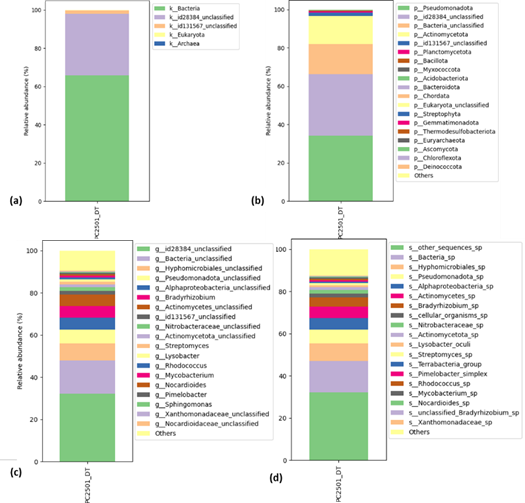
Figure 1. Microbial diversity in soil sample PC2501_DT at 4 levels. (a) Kingdom, (b) Phylum, (c) Genus, (d) Species.
Enrichment of potential dioxin-tolerant bacteria
The enrichment in mineral media supplemented with dioxin-containing soil extract significantly affected both the density and diversity of bacteria isolated from soil samples at Phu Cat Airport. As shown in Figure 2a, the bacterial density, expressed as log₁₀ CFU/g of soil (for natural samples) and log₁₀ CFU/mL (for enrichment cultures) increased markedly through successive enrichment cycles. The initial microbial population in natural soil samples ranged from 2.0 × 10³ to 3.3 × 10⁴ CFU/g (log10 ≈ 3.3 - 4.5), while the first enrichment led to a 1 - 2 log increase. After the third enrichment, cell densities reached 3.9 x 10⁶ - 4.4 x 10⁷ CFU/mL, representing approximately a 1000-fold increase compared to the original soil inoculum. The most pronounced growth was observed in samples PC2501.S1 and PC2501.S3, indicating selective enrichment of indigenous microorganisms under dioxin-associated conditions. Differences in cell density among enrichment cultures reflect variations in microbial growth responses.
The number of distinct bacterial strains also varied among samples and enrichment stages (Figure 2b). From the natural soils, 7 - 9 morphologically different colonies were isolated per sample. The first enrichment yielded comparable diversity, but a gradual decrease was observed in subsequent cycles, particularly in the third enrichments, the number of strains decreased significantly to 4 - 6 per sample, suggesting that the selective pressure associated with the dioxin-contaminated soil extract favored specialized populations capable of tolerating such conditions. The enrichment and isolation steps were designed as a screening approach to identify tolerant or potentially adaptive taxa under dioxin-associated selective pressure.
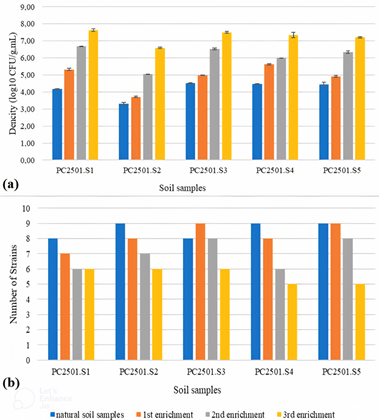
Figure 2. (a) Density and (b) Number of bacterial strains after each enrichment
Isolation of bacteria from enriched samples
From the third enrichment cycle of the five soil samples, a total of 20 bacterial strains were successfully isolated and designated as PCS.B1-PCS.B20. Based on colony and cellular morphology, these isolates were categorized into nine distinct groups. The colony and cell morphology of representative strains of each group were shown in Figure 3 and Table 1. Colonies exhibited diverse morphologies in terms of shape, surface texture, color, and margin, reflecting the heterogeneity of culturable bacteria in the dioxin-contaminated soil. Most colonies were circular, convex, and smooth with pigmentation varying from white, cream, yellow to orange-red. Microscopic examination revealed that all isolates were rod-shaped, appearing singly, in pairs, or in short chains. Gram staining showed that 6 groups were Gram-positive, while 3 groups were Gram-negative.
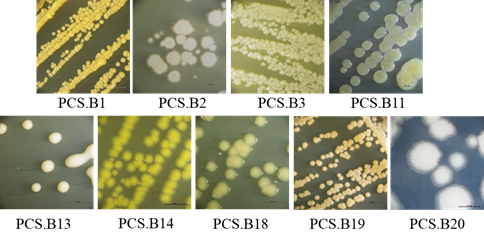
Figure 3. Colony characteristics of representative bacterial strains isolated on LB medium
Table 1. Morphological characteristics of colonies and cells of isolated bacterial strains
Group | Strains Code | Representative strains | Morphological Characterization | Gram reaction | Ability to grow in environments containing dioxin-contaminated soil extracts | |
Colony morphology | Cell morphology |
|
| |||
1 | PCS.B1 PCS.B6 PCS.B15 | PCS.B1 | Circular, dry, convex, yellow or orange | Rod-shaped cells, singly or in pairs | Gram positive | ++ |
2 | PCS.B2 | PCS.B2 | Irregular, flat, white or cream | Short, single, rod-shaped cells | Gram positive | + |
3 | PCS.B3 PCS.B4 PCS.B7 | PCS.B3 | Circular, smooth, convex, creamy yellow | single, rod-shaped, nonspore forming | Gram negative | + |
4 | PCS.B5 PCS.B9 PCS.B12 PCS.B20 | PCS.B20 | Irregular, slightly raised, white | Rod-shaped cells, arranged singly or in short chains | Gram positive | + |
5 | PCS.B8 PCS.B10 PCS.B17 PCS.B18 | PCS.B18 | Circular, smooth, convex, yellow | Rod-shaped, nonspore forming | Gram negative | ++ |
6 | PCS.B11 | PCS.B11 | Circular, smooth, crateriform, yellow | Rod-shaped, nonspore forming | Gram negative | + |
7 | PCS.B13 PCS.B16 | PCS.B13 | Circular, smooth, convex, milky white | Rod-shaped, arranged in pairs or short chains | Gram positive | ++ |
8 | PCS.B14 | PCS.B14 | Circular, smooth, convex, yellow | Rod-shaped, scattered | Gram positive | + |
9 | PCS.B19 | PCS.B19 | Circular, dry, convex, orange or red | Short rod-shaped, singly or in pairs | Gram positive | + |
Note: ++ robust growth, OD600nm ≥ 0.5
+ moderate growth 0.1 ≤ OD600nm <0.5
Qualitative growth tests in mineral medium containing 5% soil extract (604.6 pg TEQ/mL toxicity) showed that most of the isolated bacterial strains were able to survive and grow in the presence of dioxin residues. Among them, strains PCS.B1, PCS.B13 and PCS.B18 showed better growth (++) than the remaining strains.
Diversity of bacterial strains isolated from dioxin-contaminated soil through enrichment process
From nine representative bacterial strains, 16S rRNA gene sequence analysis showed that they belong to eight different genera. A total of nine bacterial genera belonging to three phyla Actinomycetota, Bacillota, and Pseudomonadota were identified among the 20 isolates obtained from the third enrichment cycle (Table 2).
Some strains belong to the same order or genus, but overall the diversity is still high. The gene sequences have been posted in the NCBI database with corresponding GenBank accession numbers (Table 2, Figure 4).
Within Actinomycetota, Rhodococcus, Microbacterium, and Paenarthrobacter were predominant, with R. ruber (PCS.B1) and R. phenolicus (PCS.B13) showing strong growth in dioxin-containing medium. Members of Bacillota, including Niallia taxi (PCS.B2) and Bacillus sp. (PCS.B20), exhibited moderate tolerance. Among Pseudomonadota, Pseudomonas sp. (PCS.B18), Vitreoscilla sp. (PCS.B3), and Stenotrophomonas maltophilia (PCS.B11) were detected, representing genera commonly associated with pollutant degradation.
Table 2. Diversity of bacterial strains isolated from dioxin-contaminated soil through enrichment process
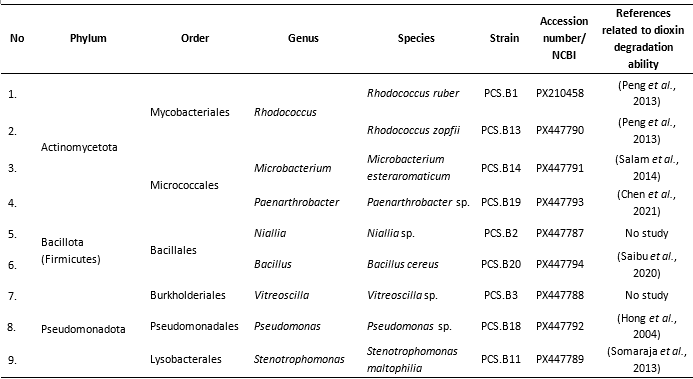
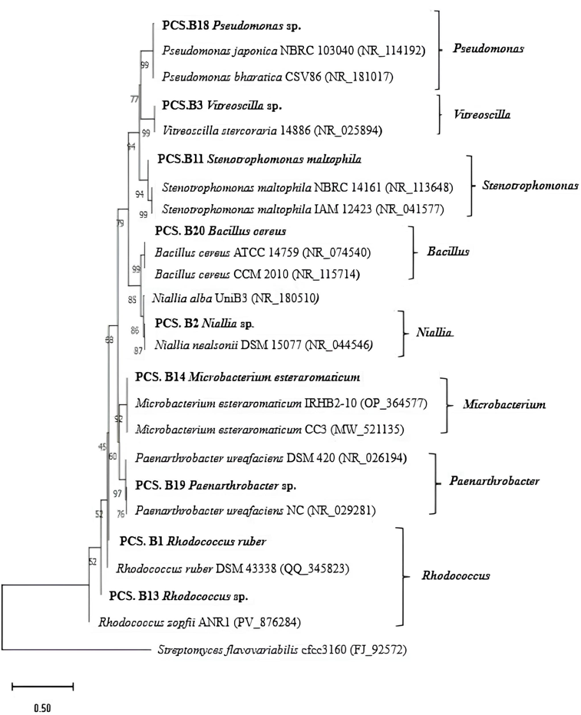
Figure 4. Phylogenetic tree of nine strains based on 16S rRNA gene sequences constructed using the Neighbor-Joining method in MEGA X. The scale bar represents an evolutionary distance of 0.50 nucleotide substitutions per site. Bootstrap values were calculated from 1000 replicates
Discussion
Comparative analysis between metagenomic sequencing and enrichment-based isolation from the same soil sample (PC2501_DT) revealed both complementary and distinct aspects of the microbial community detected in the dioxin-contaminated soil sample collected at Phu Cat Airport. Metagenomic sequencing provided a comprehensive overview of microbial diversity, identifying 39 phyla, 99 classes, and 1152 genera, dominated by Pseudomonadota, Actinomycetota, and Bacillota. In contrast, enrichment cultures yielded only 20 isolates belonging to eight genera, including Rhodococcus, Microbacterium, Paenarthrobacter, Bacillus, Niallia, Pseudomonas, Stenotrophomonas, and Vitreoscilla, divided into three phyla (Actinomycetota, Bacillota, and Pseudomonadota). This discrepancy reflects the inherent limitations of traditional culturing methods, which tend to select for fast-growing or spore-forming taxa adaptable to laboratory conditions.
Although culture-independent metagenomics detected a broader diversity dominated by Pseudomonadota (34.19%) and Actinomycetota (14.61%), the cultivation approach recovered mainly taxa from these two dominant phyla, indicating their ecological relevance under long-term dioxin exposure. However, because functional metagenomic analysis was not performed, any inference about metabolic pathways remains speculative. Genera such as Rhodococcus, Streptomyces, Bradyrhizobium, and Pseudomonas were detected by both approaches, indicating their active role and survival capacity in xenobiotic degradation. However, several abundant taxa revealed by metagenomics (e.g., Hyphomicrobiales, Lysobacter) were not recovered through cultivation, reflecting the limitation of culture-based methods in capturing the full microbial diversity.
Despite lower taxonomic richness, the cultured isolates were consistent with the dominant functional groups identified by metagenomics. Genera such as Rhodococcus, Pseudomonas, Bacillus, Stenotrophomonas are well known for their ability to degrade dioxins and related aromatic compounds via dioxygenase-mediated pathways (Hong et al., 2004; Nojiri & Omori, 2002). The strong growth of Rhodococcus ruber and Pseudomonas sp. in dioxin-containing media indicates tolerance to dioxin-containing conditions. Approximately 87% of metagenomic reads remained unclassified at the genus level, indicating the presence of novel or uncultivable taxa likely contributing to dioxin transformation under natural conditions. The selective enrichment using dioxin-containing soil extract may have favored bacteria with broader metabolic capabilities, which could partly explain the predominance of Actinomycetota and Pseudomonadota among the isolates.
The dominant phyla detected were consistent with reports from other Vietnamese dioxin hotspots such as Bien Hoa and Da Nang, where Proteobacteria, Actinobacteria, and Firmicutes represented the majority of microbial communities (Dang et al., 2008; Huy et al., 2021). Similar results with samples collected from Phu Cat Airport, Pham Kien Cuong and colleagues isolated 7 bacterial strains growing on dioxin-containing media belonging to the genera Firmicutes, Bacillaceae, Paenibacillaceae (Pham et al., 2024). In comparison, the present study additionally identified Microbacterium, Paenarthrobacter, Niallia and Vitreoscilla, expanding the known diversity of indigenous dioxin-associated bacteria in Vietnam. Microbacterium and Paenarthrobacter possess pathways for degrading aromatic intermediates (benzoate, gentisate, protocatechuate) that are relevant to multi-step biodegradation of dioxin-like molecules (Salam et al., 2014; Chen et al., 2021). No peer-reviewed studies have reported direct PCDD/F degradation by Niallia or Vitreoscilla. However, Niallia isolates can degrade aromatic compounds such as phenol and possess genes for aromatic-degradation pathways (Djamila et al., 2022). Vitreoscilla, known for producing bacterial hemoglobin (VHb), enhances oxygen utilization and has been shown to improve degradation of polycyclic aromatic compounds in co-cultured degraders (Wang et al., 2022).
Globally, comparable bacterial groups have been associated with dioxin degradation. Rhodococcus sp. p52 degraded dibenzofuran via a plasmid-borne dioxygenase system (Peng et al., 2013) and Bacillus sp. SS2 achieved over 80% removal of 2,7-dichlorodibenzo-p-dioxin (Saibu et al., 2020). These studies support the metabolic potential of the indigenous isolates from Phu Cat, particularly R. ruber, R. phenolicus, and Pseudomonas sp., which exhibit traits comparable to recognized dioxin degraders.
A major limitation of this study is that dioxin degradation was not chemically quantified. Future work should include GC-MS or HRMS analyses to directly evaluate biodegradation and to identify functional genes involved in aromatic and dioxin transformation pathways. A recent investigation in Lausanne demonstrated that the degradation of dioxins and DBF by indigenous bacteria can be quantitatively confirmed through microcosm assays coupled with chemical analysis, underscoring the importance of integrating similar approaches in future work (Di Martino et al., 2025).
It should be emphasized that the TEQ value reported for the soil extract was measured before filtration. Since filtration can remove particle-bound dioxins, the effective TEQ in the cultivation medium may be lower than the reported value. In this study, the soil extract was used primarily to provide a dioxin-associated selective pressure during enrichment, rather than to enable precise quantification of dioxin exposure or degradation.
Although this study did not directly quantify dioxin degradation, it provides valuable baseline information on the microbial community structure and potential adaptive responses to long-term dioxin exposure. Nevertheless, the combination of metagenomic and enrichment approaches provides valuable preliminary insights into the adaptive microbial ecology of dioxin-contaminated soils. These indigenous bacteria are the source material for further studies on the application of bioremediation of dioxin contamination to long-term contaminated soils such as Phu Cat Airport.
Conclusion
This study provided an initial assessment of the microbiome in dioxin-contaminated soil collected from Phu Cat Airport using both metagenomic sequencing and enrichment culture approaches. Metagenomic analysis revealed a complex and diverse bacterial community dominated by the genera Bradyrhizobium, Streptomyces, and Lysobacter, along with numerous unclassified taxa within the orders Hyphomicrobiales, Pseudomonadota, Alphaproteobacteria, and Actinomycetales. Through a three-step enrichment process in mineral salt medium supplemented with dioxin-containing soil extract, the microbial density gradually increased from 10³ CFU/g in the original soil to 10⁷ CFU/mL in enrichment cultures, while the number of culturable isolates decreased correspondingly, reflecting selective adaptation. A total of 20 bacterial strains were successfully isolated and identified, belonging to eight genera and deposited in GenBank, including Rhodococcus ruber PCS.B1, Rhodococcus zopfii PCS.B13, Microbacterium esteraromaticum PCS.B14, Paenarthrobacter sp. PCS.B19, Niallia sp. PCS.B2, Bacillus cereus PCS.B20, Vitreoscilla sp. PCS.B3, Pseudomonas sp. PCS.B18, and Stenotrophomonas maltophilia PCS.B11. These isolates exhibited tolerance to soil-extract-derived dioxin toxicity, indicating adaptive responses to long-term contamination. Although degradation activity was not assessed, the isolated strains represent promising candidates for future functional and biodegradation studies. These findings provide an initial basis for investigating the metabolic traits and potential roles of indigenous bacteria in the remediation of dioxin-contaminated environments at Phu Cat Airport, Vietnam.
Acknowledgments: This study was completed on the data from the project of Joint Vietnam-Russia Tropical Science and Technology Research Center "Research on diversity and genetic characteristics of aerobic microorganisms capable of decomposing dioxin in soil and plant roots at Phu Cat Airport" (code: SH.N2.05/25).
Funding: The authors received no financial support for the research, authorship, and/or publication of this article.
Data Availability Statement: The data supporting the findings of this study are available from the corresponding author upon reasonable request.
Author Contributions: Nguyen Thi Kim Thanh: Writing - Original Draft, Methodology, Formal Analysis. Nguyen Viet Cuong: Methodology, Data Curation. Le Van Thang: Methodology. Phung Duc Tan: Investigation. Do Thi Tuyen: Writing - Review & Editing. Ngo Cao Cuong: Data Curation, Methodology, Visualization, Writing - Review & Editing.
Conflict of Interest Statement: The authors declare that there are no conflicts of interest related to this article.
Statement on the Use of Generative AI (GenAI): The authors declare that AI tools were used only for language editing/formatting, and not for generating scientific content. All data, analyses, and interpretations were performed and verified by the authors, who take full responsibility for the manuscripts.
References
Chen, S., Li, Y., Fan, Z., Liu, F., Liu, H., Wang, L., & Wu, H. (2021). Soil bacterial community dynamics following bioaugmentation with Paenarthrobacter sp. W11 in atrazine-contaminated soil. Chemosphere, 282, Article 130976. https://doi.org/10.1016/j.chemosphere.2021.130976
Cuong, P. K., Hoang, N. V., & Thu, N. T. T. (2023). Evaluation of the dioxin degradation ability of some bacterial strains isolated from contaminated soil at A So Airport (Hue). TNU Journal of Science and Technology, 228, 335–342.
Dang, T. C. H., Nguyen, B. H., Mai, A. T., Nguyen, D. N., Nguyen, Q. V., & Nguyen, N. Q. (2008). Survey of microorganisms in areas contaminated with dioxin-containing herbicides in Da Nang airport area and detoxification of contaminated soil in laboratory conditions. Journal of Biotechnology, 6(4A), 138–143.
Di Martino, R., Soudani, M., Castiglioni, P., Rime, C., Gillioz, Y., Sartori, L., Proust, T., Neves Dos Santos, F., Lucarini, F., & Staedler, D. (2025). Degradation of dioxins and DBF in urban soil microcosms from Lausanne (Switzerland): Functional performance of indigenous bacterial strains. Microorganisms, 13, 2306. https://doi.org/10.3390/microorganisms13102306
Djamila, M., Fatma, A., Arezki, A. A., Linda, M., Abdelkader, A., & Reda, B. A. (2022). A novel Niallia nealsonii bacteria degrading phenol isolated from Oum Ghellaz Lake shore soil in Northern Algeria. Egyptian Academic Journal of Biological Sciences, C: Physiology and Molecular Biology, 14, 501–509.
Hong, H. B., Nam, I. H., Murugesan, K., Kim, Y. M., & Chang, Y. S. (2004). Biodegradation of dibenzo-p-dioxin, dibenzofuran, and chlorodibenzo-p-dioxins by Pseudomonas veronii PH-03. Biodegradation, 15, 303–313. https://doi.org/10.1023/B:BIOD.0000042185.04905.0d
Huy, P. Q., Kim Thoa, N., & Thi Cam Ha, D. (2021). Diversity of reductive dechlorinating bacteria and archaea in herbicide/dioxin-contaminated soils from Bien Hoa airbase using metagenomic approach. Vietnam Journal of Biotechnology, 18(4), 773–784. https://doi.org/10.15625/1811-4989/18/4/15799
Kumar, S., Stecher, G., Li, M., Knyaz, C., & Tamura, K. (2018). MEGA X: Molecular evolutionary genetics analysis across computing platforms. Molecular Biology and Evolution, 35(6), 1547–1549. https://doi.org/10.1093/molbev/msy096
Meier, M. J. (2014). Metagenomic analysis of contaminated soils (Doctoral dissertation, Carleton University).
Nhung, N. T. H., Nguyen, X. T. T., Long, V. D., Wei, Y., & Fujita, T. (2022). A review of soil contaminated with dioxins and biodegradation technologies: Current status and future prospects. Toxics, 10, 278. https://doi.org/10.3390/toxics10060278
Nojiri, H., & Omori, T. (2002). Molecular bases of aerobic bacterial degradation of dioxins: Involvement of angular dioxygenation. Bioscience, Biotechnology, and Biochemistry, 66, 2001–2016. https://doi.org/10.1271/bbb.66.2001
Pham, K. C., Nguyen, T. T. T., Nguyen, V. H., & Dao, A. T. (2024). Bacterial distribution in long-term dioxin-contaminated soil in Vietnam and novel dioxin degrading bacteria isolated from Phu Cat airbase. Soil and Sediment Contamination: An International Journal, 33, 216–231. https://doi.org/10.1080/15320383.2023.2195502
Peng, P., Yang, H., Jia, R., & Li, L. (2013). Biodegradation of dioxin by a newly isolated Rhodococcus sp. with the involvement of self-transmissible plasmids. Applied Microbiology and Biotechnology, 97, 5585–5595. https://doi.org/10.1007/s00253-012-4363-y
Saibu, S., Adebusoye, S. A., Oyetibo, G. O., & Rodrigues, D. F. (2020). Aerobic degradation of dichlorinated dibenzo-p-dioxin and dichlorinated dibenzofuran by bacterial strains obtained from tropical contaminated soil. Biodegradation, 31, 123–137. https://doi.org/10.1007/s10532-020-09898-8
Salam, L. B., Ilori, M. O., Amund, O. O., Numata, M., Horisaki, T., & Nojiri, H. (2014). Carbazole angular dioxygenation and mineralization by bacteria isolated from hydrocarbon-contaminated tropical African soil. Environmental Science and Pollution Research, 21, 9311–9324. https://doi.org/10.1007/s11356-014-2855-2
Schecter, A., Birnbaum, L., Ryan, J. J., & Constable, J. D. (2006). Dioxins: An overview. Environmental Research, 101, 419–428. https://doi.org/10.1016/j.envres.2005.12.003
Simon, C., & Daniel, R. (2011). Metagenomic analyses: Past and future trends. Applied and Environmental Microbiology, 77, 1153–1161. https://doi.org/10.1128/AEM.02345-10
Sinh, D. D. H., Thi, T. V. N., Lan, P. T. N., Loc, N. H., & Huy, N. D. (2018). Isolation of some strains of dibenzofuran-degrading bacteria from dioxin-contaminated soil in A Luoi, Thua Thien Hue. Hue University Journal of Science: Natural Science, 127, 141–148.
Somaraja, P., Gayathri, D., & Ramaiah, N. (2013). Molecular characterization of 2-chlorobiphenyl degrading Stenotrophomonas maltophilia GS-103. Bulletin of Environmental Contamination and Toxicology, 91, 148–153. https://doi.org/10.1007/s00128-013-1044-1
Tran, H. T., Lin, C., Hoang, H. G., Nguyen, M. T., Kaewlaoyoong, A., Cheruiyot, N. K., Bui, X.-T., & Vu, C. T. (2020). Biodegradation of dioxin-contaminated soil via composting: Identification and phylogenetic relationship of bacterial communities. Environmental Technology & Innovation, 19, Article 101023. https://doi.org/10.1016/j.eti.2020.101023
UNDP Viet Nam. (2015). Evaluation of dioxin project impact: Evaluation of dioxin project impact to environment and people. UNDP Viet Nam.
Wang, L., Tan, Y., Sun, S., Zhou, L., Wu, G., Shao, Y., Wang, M., & Xin, Z. (2022). Improving degradation of polycyclic aromatic hydrocarbons by Bacillus atrophaeus laccase fused with Vitreoscilla hemoglobin and a novel strong promoter replacement. Biology, 11(8), 1129. https://doi.org/10.3390/biology11081129