

Article Sidebar

 CC BY 4.0
Open access
CC BY 4.0
Open access
You may copy, redistribute and adapt this article, provided that you:
-
Credit the authors and the original article
© 2026 Journal of Tropical Science and Engineering
Concentration and Source of dl-PCBs in PM2.5 in Central Hanoi, Vietnam
Main Article Content
Abstract
Fine particulate matter (PM2.5) pollution is a major air quality concern in Hanoi, while information on PM2.5 - bound dioxin - like polychlorinated biphenyls (dl-PCBs) remains limited. This study investigated the concentrations, congener profiles, and potential sources of dl-PCBs associated with PM2.5 in central Hanoi during the dry season of 2025. Fourteen consecutive 24-h PM2.5 samples were collected from 4 to 19 April 2025 at an urban site influenced by traffic and other anthropogenic activities. Twelve dl-PCB congeners were analyzed according to U.S. EPA Method 1668B using high resolution gas chromatography high resolution mass spectrometry (HRGC - HRMS) with isotope-dilution quantification. The 24-h PM2.5 concentrations ranged from 32.4 to 83.1 µg/m3, averaging 60.3 µg/m3; 64.3% of samples exceeded the Vietnamese 24-h standard of 50 µg/m3, while the mean concentration was approximately four times the WHO guideline value of 15 µg/m3. Toxic equivalent concentrations of dl-PCBs ranged from 1 × 10⁻³ to 11 × 10-3 pgTEQ/m3, with an average of 4 × 10⁻³ pgTEQ/m3. Congener profiles were dominated by PCB-118 (36.3 - 52.9%) and PCB-105 (17.1 - 24.4%), together accounting for approximately 70% of total dl-PCBs, followed by PCB-77 (7.2 - 10.6%). This profile suggests that volatilization from PCB - containing products and materials may represent an important source of atmospheric dl-PCBs in central Hanoi, although contributions from thermal processes cannot be excluded. These findings provide baseline data on PM2.5 - bound dl-PCBs in central Hanoi, supporting future source apportionment studies, air - quality management, and environmental health assessments.
Keywords
Air pollution, dl-PCBs, Hanoi, PM2.5.
Article Details
Introduction
Air pollution, particularly fine particulate matter (PM2.5), has become and increasingly prominent concerns due to its negative impacts on the environment and human health (Nguyen et al., 2018). These particles can penetrate deeply into the lungs via the respiratory system, reach the heart, and enter the bloodstream, thereby causing severe health effects due to the physical and chemical properties of PM2.5 (Hien et al., 2022; Linh et al., 2023). Long-term exposure to PM2.5 has been linked to increased rates of respiratory and cardiovascular diseases as well as reduced life expectancy (Zhang et al., 2022). According to statistics from the World Health Organization (WHO), approximately 60,000 people die annually in Vietnam due to air pollution, with economic losses estimated at 10.82 - 16.63 billion USD, equivalent to about 5% of the country’s GDP (Nguyen, 2021; World Health Organization, 2024). Based on their sources, natural sources of PM2.5 include sandstorms, volcanic eruptions, pollen, and sea spray. Meanwhile, anthropogenic sources arise from human activities, such as transportation, industrial processes, agriculture, and handicraft production. Finally, secondary sources refer to particles formed in the atmosphere through complex bio-geo-chemical and physical reactions (Gurjar et al., 2010). These impacts result from the contribution of local emission sources or long-range transport of PM2.5, depending on their transport trajectories (Hien et al., 2022), the physical properties of the particles, and meteorological and topographic conditions (Bui et al., 2023). The composition of PM2.5 includes three main groups: water-soluble ions, metallic elements, and organic compounds (Bui et al., 2023). Among these, organic aerosols dominate (30-90%), containing thousands of harmful components (Yao et al., 2016). A notable group within these compounds is polychlorinated biphenyls (PCBs), which have garnered significant research attention (Chang et al., 2013; Ding et al., 2015). PCBs are substances that persist in the environment, are bioaccumulative, have long-range transport potential, and are highly toxic. They belong to the group of typical persistent organic pollutants (POPs), characterized by low water solubility, high lipid solubility, and, notably, the potential to bioaccumulate, with effects that progressively intensify along the food chain (Zhu et al., 2017). Although banned in the 1970s and 1980s, PCBs continue to be emitted from obsolete industrial products and the combustion of chlorine-containing materials (Han et al., 2010). Among the 209 types of PCBs, 12 dioxin-like PCBs (dl-PCBs) have been proven to cause endocrine disruption, irritation, and carcinogenic effects (Pham et al., 2019).
Atmospheric transport is the primary means by which organic compounds spread from emission sources to distant regions (Hien et al., 2022). Suspended PM2.5 can effectively act as a carrier for transporting dl-PCBs in the environment. Common suspended particles in the atmosphere can enter the human body through various pathways (e. g., food, breath, and skin) and pose a significant threat to humans (Sun et al., 2020). High-resolution gas chromatography coupled with high-resolution mass spectrometry (HRGC–HRMS) has therefore been widely applied and recognized as a reliable analytical technique for the determination of trace-level dl-PCBs in PM samples (Mila et al., 2022). dl-PCBs can enter the atmosphere through emission sources and subsequently adhere to PM2.5 particles, penetrating deep into the human body via the respiratory system (Sun et al., 2020). Due to their distinct characteristics as POPs, research on dl-PCBs has been extensive worldwide, with numerous studies (Han et al., 2010; Pham et al., 2019; Sun et al., 2020). However, comprehensive assessments of dl-PCBs in PM2.5 in Vietnam remain scarce, highlighting the need for further research on this issue.
In this study, we collected 14 daily PM2.5 samples during a campaign investigating air pollution levels in the dry season in the central area of Hanoi, Vietnam, and measured the concentrations of dl-PCBs in these samples. Through this, the study can provide fundamental data to support local pollution control efforts.
Materials and Methods
Sampling PM2.5
The sampling site was established within the campus of the University of Engineering and Technology (VNU-UET), in the central area of Hanoi (105°46'58.1" E; 21°02'17.8" N) (Fig. 1). Located in the urban center of the city, this site features a very high population density and intense commercial-service activities. More importantly, the sampling station is directly influenced by major urban traffic arteries. These roads experience extremely heavy traffic volumes, leading to severe and frequent congestion, particularly during peak hours (e.g., 7-9 am. and 5-7 pm.). Therefore, this location was selected for its high representativeness of an air environment strongly impacted by anthropogenic emissions, primarily from traffic exhaust and other human activities.
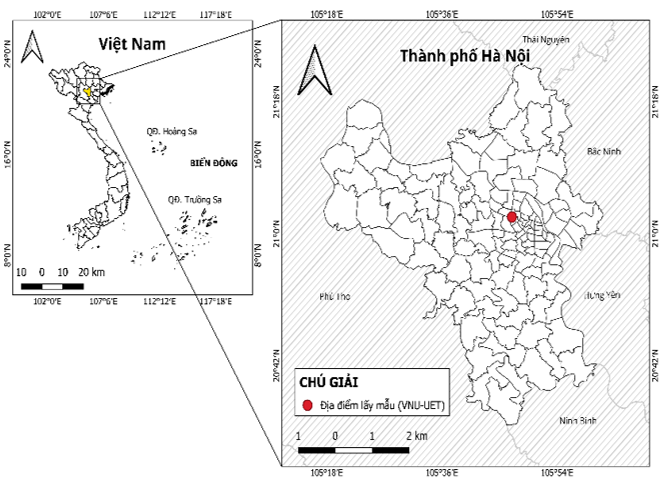
Figure 1. Sampling site
Daiy PM2.5 samples were collected using a high-volume air sampler, TE-1000DBLX (Tisch Environment, Inc.), which captures particulate and gaseous pollutants. The sampler is equipped with a 200 L/min inlet and 102 mm diameter quartz filter paper (TE-QMA4, Tisch Environmental Inc., USA). PM₂.₅ samples were collected daily, with each sample representing a 24 hours (06:00–06:00 the following day). After sampling, the used filter was placed back into its Petri dish and stored in an airtight bag under refrigeration. All samples were transported to the Laboratory of the Institute of Chemistry and Environment (Vietnam-Russia Tropical Centre) for determining dust concentrations and analyzing the dl-PCBs concentrations in the collected samples. Sampling was conducted from 4 to 19 April 2025, which falls within the dry season in Hanoi, typically extending from November to April of the following year.
Determine PM2.5 Mass Concentration
The daily PM2.5 samples were collected, transferred to the laboratory, and then the filter papers were dried at 110°C. Subsequently, they were weighed using a Mettler Toledo XS 205 analytical balance. The daily PM2.5 concentration was then determined based on Eq. (1).
(1)
where:
C: PM2.5 concentration (µg/m³)
m1: Weight of the filter paper before sampling (µg)
m2 : Weight of the filter paper after sampling (µg)
V: Total volume of air passing through the sampler during the sampling period (m³)
dl-PCBs Analysis
The analysis of dl-PCBs was conducted according to US EPA Method 1668B (U.S. Environmental Protection Agency, 2010). The PM2.5 samples were extracted using a Soxhlet system with toluene as the solvent. The extract was then subjected to initial treatment with H2SO4 and KOH, followed by cleanup through a multi-layer silica gel column. To separate dl-PCBs from PCDD/Fs congeners, the sample was passed through an activated carbon column and subsequently further purified using an alumina column. The final extract was spiked with a 13C12-labeled dl-PCB internal standard, concentrated, and introduced into an HRGC-HRMS system (equipped with a DB-5MS column) for analysis. The quantification of dl-PCBs was performed using the isotope dilution method.
Quality Assurance (QA) and Quality Control (QC)
To ensure data quality and analytical reliability, quartz fiber filters were pre-combusted at 450°C for 6h to remove residual organic contaminants prior to sampling. After collection, PM2.5 samples were transported to the dioxin analysis laboratory of the Joint Vietnam-Russia Tropical Science and Technology Research Center and stored at - 20°C until analysis. Field-blank samples were processed and analyzed in parallel with PM2.5 samples to control for potential contamination and assess sampling and handling reliability.
All analyses were conducted at the ISO/IEC 17025 accredited laboratory of the Joint Vietnam-Russia Tropical Science and Technology Research Center (VRTC), Hanoi (No. 856) (Bureau of Accreditation, 2015). The limit of detection (LOD) for dl-PCBs was 0.003 pg/m³, and the corresponding limit of quantification (LOQ) was 0.012 pg/m³. All measured concentrations in PM2.5 samples exceeded the LOQ, ensuring reliable quantification. Quantification was performed using isotope dilution, with recoveries of ¹³C₁₂-labeled standards ranging from 40 to 135%, in compliance with US performance criteria. EPA Method 1668C. Duplicate analyses showed that concentration differences among congeners did not exceed 25%, indicating good method repeatability and analytical reliability.
Results
Concentration Level of PM2.5
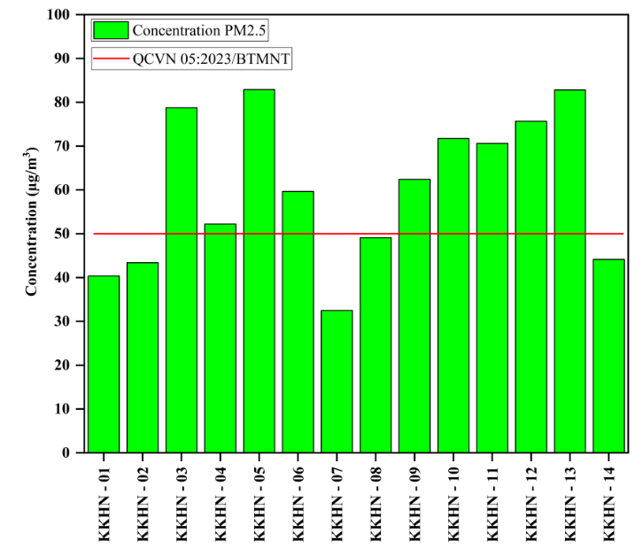
The monitoring results of the 24-hour average PM2.5 concentrations in the Hanoi center, during the dry season are presented in Fig. 2. Within the total 14 monitored samples, 9 samples (accounting for 64.3%) exceeded the limit value specified in the National Technical Regulation on Ambient Air Quality (QCVN 05:2023/BTNMT) for 24-hour average PM2.5 concentration (50 µg/m³). Concentrations fluctuated significantly, ranging from 32.4 µg/m³ (KKHN-07) to 83.1 µg/m³ (KKHN-05 and KKHN-13). The average value across all 14 collected PM2.5 samples was 60.3 µg/m³, which is 1.2 times the permissible limit set by QCVN and 4 times the World Health Organization (WHO) recommendation (15 µg/m³ for a 24-hour average) (World Health Organization, 2021). Those values reveal an alarming level of air pollution in Hanoi, Vietnam.
Concentration of dl-PCBs
Fig. 3 shows that the measured dl-PCBs concentrations during the dry season sampling period in Hanoi exhibit significant fluctuations, ranging from 10-3 pg TEQ/m³ (recorded in sample 0425HN10) to 11×10-3 pg TEQ/m³ (in sample 0425HN07), representing a more than tenfold difference. The trend shows considerable variability, likely reflecting localized pollution events, with markedly higher concentrations recorded in samples 0425HN06, 0425HN07, and 0425HN13, at 9×10⁻³ pg TEQ/m³, 11×10-3 pg TEQ/m³, and 8×10⁻³ pg TEQ/m³, respectively. In contrast, the middle period of the survey (from sample 0425HN08 to 0425HN12) recorded consistently low TEQ concentrations, indicating significant daily variations in air quality at the monitoring site. The average concentration in the study area was 4×10⁻³ pg TEQ/m³, which is comparable to values reported in other regions, such as northern Taiwan (2×10⁻³ - 5×10⁻³ pg TEQ/m³) (Chi et al., 2008). This value is lower than those recorded in Ho Chi Minh City in a commercial area, which averaged 12×10-3 pg TEQ/m³ (Trinh et al., 2018), and in China, where concentrations ranged from 7×10⁻³ - 16×10-3 pg TEQ/m³ (Die et al., 2015).
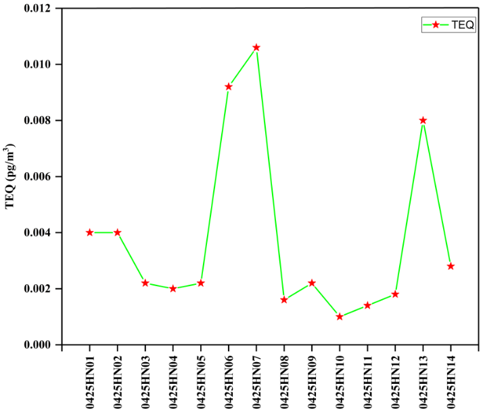
Figure 3: The concentration levels of dl – PCB
Discussion
Concentration of PM2.5
The monitoring results showing an average PM2.5 concentration (60.3 µg/m³) in early April 2025 indicate a particularly severe pollution situation. This value is nearly equivalent to the average (59.5 µg/m³) recorded during peak air pollution episodes in inner-city Hanoi in a recent study by Dat et al. (2024). Analysis of the wind rose diagram (Figure 3) reveals that the prevailing wind directions during the sampling period were Southeast (SE) and East-Southeast (ESE). The characteristic wind directions during the study period demonstrate a clear influence of long-range pollution transport from the SE. This aligns with previous studies, where the HYSPLIT trajectory model indicated that air masses originating from the SE/ESE direction likely carried significant amounts of pollutant precursors and transported them deep into the inner-city area of Hanoi (Cohen et al., 2010; Dat et al., 2024). During transport, these pollutants undergo chemical transformations, forming secondary inorganic aerosols that directly contribute to the total observed PM2.5 concentration in Hanoi. Furthermore, local pollution sources could be a key factor contributing to high PM2.5 levels, as pollutants accumulate when air masses stagnate over Hanoi City, which has dense traffic and construction activities (Bui & Duong, 2019).
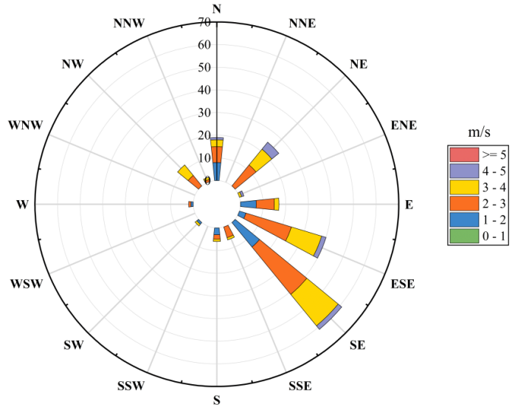
Figure 4: Windrose during sampling time
Another issue in recent years in Hanoi City is that straw burning also contributes to air pollution (Le et al., 2022; Nguyen & Nguyen, 2020). However, the sampling period did not coincide with the large-scale straw burning episodes in the Red River Delta, which typically occur in June and October each year. This further supports the conclusion that the pollution sources in the study area primarily originate from transportation, industrial, and other human activities within the urban area.
Congeners of dl-PCBs
Figure 5 shows that pentachlorinated biphenyls (PeCBs) congeners contributed the largest proportion across all monitoring days. PCB-118 was the dominant contributor, accounting for 36.3% to 52.9%, followed by PCB-105 at 17.1% to 24.4%. The tetrachlorinated congener PCB-77 ranked third, with a contribution ranging from 7.2% to 10.6%. In contrast, heavier congeners (HxCBs, HpCBs) constituted only a very small fraction. This congener profile aligns with characteristics of urban background pollution, where dl-PCBs primarily originate from two sources: volatilization from PCB-containing materials and thermal processes (Abad et al., 2006). Research by Frederiksen et al. (2012) indicates that solder-welding activities can significantly alter the congener distribution of dl-PCBs in ambient air, with PCB-118 and PCB-105 being the two predominant congeners, accounting for approximately 80% of total dl-PCBs. Conversely, dl-PCBs emitted from thermal processes exhibit a lower relative abundance of PCB-118 and PCB-105 compared to emissions from sealed welding activities. Studies in Taiwan have shown that PCB-118 and PCB-105, formed de novo during combustion, account for about 35-45% of total dl-PCBs. Additionally, lower-chlorinated dl-PCB congeners, such as PCB-77, PCB-126, and PCB-169, also constitute a significantly higher proportion in such scenarios (Bai et al., 2017). Specifically, in this study, since PCB-118 and PCB-105 constitute about 70% of the total dl-PCBs concentration, while the combined share of PCB-77, PCB-126, and PCB-169 is relatively small (approximately 20%), the primary source of dl-PCBs in the inner-city area of Hanoi is likely volatilization from PCB-containing products. In developing countries, PCB emissions have been linked to sources such as used engine oil, transformer oil, and imported electronic waste from developed nations, as found in research findings (Kaw & Kannan, 2017). This supports the conclusion that PCB-containing products significantly influence the levels of dl-PCBs in the air of Hanoi City.
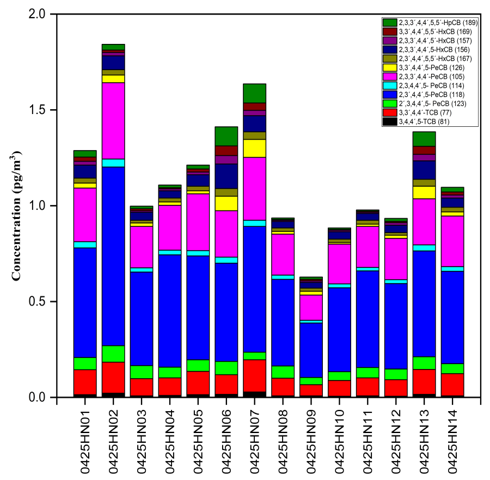
Figure 5: Concentration levels of the congeners dl-PCBs
Conclusion
The study has provided important empirical data on the characteristics of PM2.5 pollution and the concentration of dl-PCBs in the urban atmosphere of the central area in Hanoi during the dry season of 2025. The results show that the 24-hour average PM2.5 concentration (60.3 µg/m³) significantly exceeds the limit specified in QCVN 05:2023/BTNMT and is four times higher than the WHO recommendation. It reflects a severe and persistent fine particulate pollution situation in the study area. Regarding dl-PCBs, the measured TEQ concentrations ranged from ×10-3 to 11×10-3 pgTEQ/m³, with an average value of 4×10⁻³ pgTEQ/m³. This is comparable to urban areas in northern Taiwan but lower than Ho Chi Minh City and some industrial regions in China. The congener profile of dl-PCBs in the PM2.5 samples revealed a clear dominance of PCB-118 and PCB- 105 (accounting for approximately 70%), while lower-chlorinated congeners such as PCB-77, PCB-126, and PCB-169 contributed a smaller proportion. Therefore, it can be preliminarily concluded that the primary source of dl-PCBs in the inner-city area of Hanoi is likely volatilization from PCB-containing products.
Overall, the results confirm that the study objectives were achieved by characterizing PM2.5 levels and assessing the occurrence and potential sources of dl-PCBs in the urban atmosphere of Hanoi. This work provides one of the first integrated datasets combining PM2.5 mass concentrations with dl-PCBs measurements in central Hanoi, offering valuable baseline information for air quality assessment and supporting future air quality management and environmental health evaluations.
Funding: The authors would like to thank the project "Source apportionment of dioxin/furan and dioxin-like compounds in ambient PM2.5 in Hanoi" funded by the Joint Vietnam-Russia Tropical Science and Technology Research Center, for providing the information and data necessary to complete this research.
Data Availability Statement: The data supporting the findings of this study are available from the corresponding author upon reasonable request.
Author Contributions: Bui Duy Linh: Formal Analysis, Investigation, Visualization, Writing - Original Draft; Hoang Anh Le: Conceptualization, Methodology, Data Curation, Visualization, Writing - Review & Editing, Supervision; Nguyen Thanh Tuan: Resources, Data Curation, Writing - Review & Editing; Nguyen Duc Thang: Resources, Data Curation; Nguyen Thi Nang: Writing - Original Draft; Nguyen Thi Thu: Formal Analysis; Tran Dinh Phien: Formal Analysis; Pham Chau Thuy: Methodology, Data Curation, Visualization; Nguyen Viet Thanh: Methodology, Data Curation, Visualization.
Statement on the Use of Generative AI: The authors declare that AI tools were used only for language editing/formatting, and not for generating scientific content. All data, analyses, and interpretations were performed and verified by the authors, who take full responsibility for the manuscript.
Conflicts of Interest Statement: The authors declare that they have no known competing financial interests or personal relationships that could have appeared to influence the work reported in this paper.
References
Abad, E., Martínez, K., Caixach, J., & Rivera, J. (2006). Polychlorinated dibenzo-p-dioxins, dibenzofurans and 'dioxin-like' PCBs in flue gas emissions from municipal waste management plants. Chemosphere, 63(4), 570–580. https://doi.org/10.1016/j.chemosphere.2005.08.026
Bai, S. T., Chang, S. H., Duh, J. M., Sung, F. H., Su, J. S., & Chang, M. B. (2017). Characterization of PCDD/Fs and dioxin-like PCBs emitted from two woodchip boilers in Taiwan. Chemosphere, 189, 284–290. https://doi.org/10.1016/j.chemosphere.2017.09.080
Bui, D. H., & Duong, V. H. (2019). Improving the legal framework to enhance the effectiveness of marine environmental pollution control in Vietnam today.
Bui, D. L., Le, H. A., Ngo, Q. K., & Nghiem, X. T. (2023). Chemical characterization, source apportionment, and health risk assessment nexus of PM2.5-bound major heavy metals in Bien Hoa city, southern Vietnam. Atmospheric Environment: X, 17, 100209. https://doi.org/10.1016/j.aeaoa.2022.100209
Bureau of Accreditation. (2015). Search laboratories: Department of Chemistry and Environment.
Chang, Y. T., KH, C., Chou, C. C. K., Chen, Y. W., Weng, Y. M., & Hsu, Y. C. (2013). Comparison of atmospheric PCDD/Fs and PCBs between TSP and PM2.5 aerosol in northern Taiwan. Organohalogen Compounds, 75, 964-967.
Chi, K. H., Hsu, S. C., Wang, S. H., & Chang, M. B. (2008). Increases in ambient PCDD/F and PCB concentrations in Northern Taiwan during an Asian dust storm episode. The Science of the total environment, 401(1-3), 100–108. https://doi.org/10.1016/j.scitotenv.2008.03.041
Cohen, D. D., Crawford, J., Stelcer, E., & Vuong, T. B. (2010). Long-range transport of fine particle windblown soils and coal-fired power station emissions into Hanoi between 2001 and 2008. Atmospheric Environment, 44(31), 3761–3769. https://doi.org/10.1016/j.atmosenv.2010.06.047
Dat, N.Q., Ly, B.T., Nghiem, T.D., Nguyen, H.T.T., Sekiguchi, K., Huyen, T.T., Vinh, T.H., & Tien, L.Q. (2024). Influence of secondary inorganic aerosol on the concentrations of PM2. 5 and PM0. 1 during air pollution episodes in Hanoi, Vietnam. Aerosol and Air Quality Research, 24(4), 220446. https://doi.org/10.4209/aaqr.220446
Die, Q., Nie, Z., Liu, F., Tian, Y., Fang, Y., Gao, H., Tian, S., He, J., & Huang, Q. (2015). Seasonal variations in atmospheric concentrations and gas–particle partitioning of PCDD/Fs and dioxin-like PCBs around industrial sites in Shanghai, China. Atmospheric Environment, 119, 220-227. https://doi.org/10.1016/j.atmosenv.2015.08.022
Ding, S., Dong, F., Wang, B., Chen, S., Zhang, L., Chen, M., Gao, M., & He, P. (2015). Polychlorinated biphenyls and organochlorine pesticides in atmospheric particulate matter of Northern China: Distribution, sources, and risk assessment. Environmental science and pollution research international, 22(21), 17171–17181. https://doi.org/10.1007/s11356-015-4949-x
Frederiksen, M., Meyer, H. W., Ebbehøj, N. E., & Gunnarsen, L. (2012). Polychlorinated biphenyls (PCBs) in indoor air originating from sealants in contaminated and uncontaminated apartments within the same housing estate. Chemosphere, 89(4), 473–479. https://doi.org/10.1016/j.chemosphere.2012.05.103
Gurjar, B. R., Molina, L. T., & Ojha, C. S. P. (2010). Air pollution: Health and environmental impacts. CRC Press.
Han, W., Feng, J., Gu, Z., Wu, M., Sheng, G., & Fu, J. (2010). Polychlorinated biphenyls in the atmosphere of Taizhou, a major e-waste dismantling area in China. Journal of environmental sciences (China), 22(4), 589–597. https://doi.org/10.1016/s1001-0742(09)60150-9
Hien, T. T., Chi, N. D. T., Huy, D. H., Le, H. A., Oram, D. E., Forster, G. L., Mills, G. P. & Baker, A. R. (2022). Soluble trace metals associated with atmospheric fine particulate matter in the two most populous cities in Vietnam. Atmospheric Environment: X, 15, Article 100178. https://doi.org/10.1016/j.aeaoa.2022.100178
Hien, T. T., Huy, D. H., Dominutti, P. A., Chi, N. D. T., Hopkins, J. R., Shaw, M., Forster, G., Mills, G., Le, H.A., & Oram, D. (2022). Comprehensive volatile organic compound measurements and their implications for ground-level ozone formation in the two main urban areas of Vietnam. Atmospheric Environment, 269, Article 118872. https://doi.org/10.1016/j.atmosenv.2021.118872
Kaw, H. Y., & Kannan, N. (2017). A Review on Polychlorinated Biphenyls (PCBs) and Polybrominated Diphenyl Ethers (PBDEs) in South Asia with a Focus on Malaysia. Reviews of environmental contamination and toxicology, 242, 153–181. https://doi.org/10.1007/398_2016_14
Le, H. A., Ngo, Q. K., & Mallick, J. (2022) (2022). Integrated emission inventory and modelling to assess the distribution of particulate matters from rice straw open burning in Hanoi, Vietnam. Atmospheric Pollution Research, 13(5), Article 101416. https://doi.org/10.1016/j.apr.2022.101416
Linh, B. D., Le, H. A., & Truong, N. X. (2023). Physico-chemical properties and transboundary transport of PM2.5 in Bien Hoa City, Dong Nai Province, Southeastern Vietnam. Environmental science and pollution research international, 30(13), 36533–36544. https://doi.org/10.1007/s11356-022-24801-z
Mila, A, Cao, R., Geng, N., Zhu, X., & Chen, J. (2022). Characteristics of PAHs, PCDD/Fs, PCBs and PCNs in atmospheric fine particulate matter in Dalian, China. Chemosphere, 288(Pt 1), 132488. https://doi.org/10.1016/j.chemosphere.2021.132488.
Nguyen, Q. (2021). Air pollution top environmental concern among Vietnamese citizens. VnExpress.
Nguyen, T. N. T., Le, H. A., Mac, T. M. T., Nguyen, T. T. N., Pham, V. H., & Bui, Q. H. (2018). Current status of PM2.5 pollution and its mitigation in Vietnam. Global Environmental Research, 22, 73–83.
Nguyen, T. T. M., & Nguyen, T. M. C. (2020). Analyzing the impact of accessibility on property price by using hedonic-price modelling for supporting urban land management towards TOD in Hanoi, Vietnam. In IOP Conference Series: Materials Science and Engineering, 869, 062039. IOP Publishing. https://doi.org/10.1088/1757-899X/869/6/062039
Pham, M. T. N., Anh, H. Q., Nghiem, X. T., Tu, B. M., Dao, T. N., & Nguyen, M. H. (2019). Characterization of PCDD/Fs and dioxin-like PCBs in flue gas from thermal industrial processes in Vietnam: A comprehensive investigation on emission profiles and levels. Chemosphere, 225, 238–246. https://doi.org/10.1016/j.chemosphere.2019.03.012
Sun, H., Chen, H., Yao, L., Chen, J., Zhu, Z., Wei, Y., Ding, X., & Chen, J. (2020). Sources and health risks of PM2.5-bound polychlorinated biphenyls (PCBs) and organochlorine pesticides (OCPs) in a North China rural area. Journal of environmental sciences (China), 95, 240–247. https://doi.org/10.1016/j.jes.2020.03.051
Trinh, M. M., Tsai, C. L., Hien, T. T., Thuan, N. T., Chi, K. H., Lien, C. G., & Chang, M. B. (2018). Atmospheric concentrations and gas-particle partitioning of PCDD/Fs and dioxin-like PCBs around Hochiminh city. Chemosphere, 202, 246–254. https://doi.org/10.1016/j.chemosphere.2018.03.087
U.S. Environmental Protection Agency. (2010). Method 1668B: Chlorinated biphenyl congeners in water, soil, sediment, biosolids, and tissue by HRGC/HRMS. Office of Water.
World Health Organization. (2021). Global air quality guidelines: Particulate matter (PM2.5 and PM10), ozone, nitrogen dioxide, sulfur dioxide and carbon monoxide.
World Health Organization. (2024). Air pollution.
Yao, L., Yang, L., Yuan, Q., Yan, C., Dong, C., Meng, C., Sui, X., Yang, F., Lu, Y., & Wang, W. (2016). Sources apportionment of PM2.5 in a background site in the North China Plain. The Science of the total environment, 541, 590–598. https://doi.org/10.1016/j.scitotenv.2015.09.123
Zhang, D., Li, H., Luo, X. S., Huang, W., Pang, Y., Yang, J., Tang, M., Mehmood, T., & Zhao, Z. (2022). Toxicity assessment and heavy metal components of inhalable particulate matters (PM2. 5 & PM10) during a dust storm invading the city. Process Safety and Environmental Protection, 162, 859-866. https://doi.org/10.1016/j.psep.2022.04.065
Zhu, Q., Zheng, M., Liu, G., Zhang, X., Dong, S., Gao, L., & Liang, Y. (2017). Particle size distribution and gas-particle partitioning of polychlorinated biphenyls in the atmosphere in Beijing, China. Environmental science and pollution research international, 24(2), 1389–1396. https://doi.org/10.1007/s11356-016-7936-y