

New siloxane antifouling coatings based on quaternary ammonium salts of tetramethylene diamine
Main Article Content
Abstract
The problem of biofouling remains relevant for the maritime industry and shipping. The most effective method of combating it is the use of antifouling coatings. Antifouling coatings with metallic biocidal additivesare the most effective today. Such coatings suppress biofouling, but at the same time have a negative effect on the environment due to the leaching of heavy metal ions into seawater. At the same time, the ban on highly toxic compounds in coating formulations stimulated the need to develop new, environmentally friendly and effective solutions. Today, self-polishing coatings are one of the most promising. Due to the low surface energy and adhesion, microorganisms are easily washed away by streams of water. To do this, the ship needs to increase its speed. To minimize the primary attachment of organisms to the surface, self-polishing coatings use biocides. Coatings based on quaternary ammonium salts (QACs) are one of the most promising areas of biocides in this field. Such coatings combine such qualities as efficiency, environmental friendliness, and durability. In this article, we describe the production of new biocidal coatings based on MT resins (silsesquioxanes based on mono-(M) and trifunctional (T) alkoxysilanes) modified with quaternary ammonium salts. We have developed a method for the synthesis of organosilicon derivatives of tetramethylethylenediamine and the further production of MT resins based on them. A technique for coating metallic substrates has been developed. The antibacterial properties of the compounds obtained were studied, as well as tests for marine fouling. Studies of the obtained samples for antibacterial properties have established that the coatings inhibit the growth of both gram-positive and gram-negative bacteria, as well as inhibit the process of marine fouling. Marine fouling was assessed by increasing biomass on coated steel plates immersed in tropical waters near Dam-Bay Island (Nha Trang). The coatings were exhibited for a total of 1 year. The self-polishing properties of the coatings were evaluated by surface treatment with strong water pressure.
Keywords
Biofouling, quaternary ammonium salts, antifouling coatings
Article Details

This work is licensed under a Creative Commons Attribution 4.0 International License.
Introduction
The problem of biofouling remains relevant for the maritime industry and shipping. Biofouling is the process of accumulation and growth of various microorganisms, plants and animals on surfaces in seawater. This process is detrimental to most materials, as it leads to corrosion, reduced performance and complete destruction (Li & Sun, 2022; Vishwakarma, 2019).
Marine vessels, machinery, coastal infrastructure, buoys and other objects in contact with seawater are subject to biofouling processes. This process significantly shortens their service life (Kirschner & Brennan, 2012). Facilities such as piers, oil platforms, coastal structures, and tidal power plants can be disabled by corrosion processes, creating the risk of major accidents and environmental disasters (Yebra et al., 2004). All these negative consequences lead to enormous economic losses. Which, according to average estimates, exceed 180 billion per year (Kamensky et al., 2020; Chambers et al., 2006). The most effective method of combating it is the use of antifouling coatings. Antifouling coatings with metallic biocidal additives are the most effective today (Chen et al., 2021). Such coatings suppress biofouling, but at the same time have a negative effect on the environment due to the leaching of heavy metal ions into seawater. At the same time, the ban on highly toxic compounds in coating formulations stimulated the need to develop new, environmentally friendly and effective solutions (Muadtrap et al., 2025; Brzozowska et al., 2014).
All antifouling coatings are conditionally divided into three groups depending on their mechanism of action (Egghe et al., 2023):
1) Release of an antibacterial agent. The mechanism of action of coatings, based on the release of an antibacterial agent, is the leaching of biocidal compounds as a result of their diffusion into an aqueous medium and hydrolysis of covalent bonds. Despite its effectiveness, this approach has significant limitations related to the negative impact on the environment due to the toxicity of continuously released substances.
2) Contact destruction. In such coatings, antimicrobial agents are covalently fixed to the surface using flexible polymer chains. Upon contact with the cell, the long hydrophobic radicals of the agent physically perforate its membrane, leading to lysis and death. Cationic compounds (QACs, chitosan, Antimicrobial Peptides) and enzymes are the most effective for this mechanism based on direct membrane interaction.
3) Anti-adhesive coatings. The effect of such coatings is based on a non-cytotoxic mechanism that prevents the very initial stages of biofouling, that is, the adhesion of microorganisms to the surface. The key components are polymers such as polyethylene glycol (PEG) and zwitter ions, which create a hydrated barrier that effectively counteracts the adsorption of proteins and cells. However, the main disadvantages of such systems are the lack of stability in long-term operation, as well as the complexity of their synthesis and application.
Organosilicon coatings modified with quaternary ammonium salts are an environmentally friendly alternative. They have a number of advantages: relative cheapness, safety for the environment and humans, a combination of excellent mechanical properties, and ease of production (Zhang et al., 2023; Wang et al., 2025; Yang et al., 2024).
QACs are ionic antibacterial compounds consisting of a positively charged hydrophilic head and a negatively charged hydrophobic tail. In the composition of an QACs, a nitrogen atom is bound to four organic groups, which gives the molecule a positive charge (Spettel et al., 2017). The mechanism of the antifouling effect of such coatings is to prevent the formation of a layer of adsorbed microorganisms on the surface, which prevents the further fouling process of larger organisms from developing (Haldar et al., 2005). Thus, at the first stage, electrostatic adsorption of a negatively charged cell membrane with a positively charged surface of the material occurs on the surface of the coating. After their contact, perforation and destruction of the membranes of microbial cells occur, which eventually causes cell lysis (Dipak et al., 2021).
One of the main advantages of QACs as antibacterial agents is their ability to covalently bind to polymer matrices. Due to this feature, indelible coatings can be created on the basis of the QACs. Such coatings are much safer for the environment, as well as more durable (Luan et al., 2018).
As tests have shown, coatings based on QACs combine such qualities as efficiency, environmental friendliness, durability (Rittschof, 2010; Fusetani, 2004). In this article, we describe the production of new biocidal coatings based on organosilicon MT resins modified with quaternary ammonium salts and methyltriethoxysilane. As part of this study, coatings on steel plates were examined for marine fouling in tropical waters of Vietnam and their effectiveness in terms of fouling control was demonstrated.
Materials and Methods
Materials
Tetramethylethylenediamine, bromohexadecane, chloroform, hexamethyl-disiloxane, methyltriethoxysilane, acetyl chloride, acetic acid, toluene, sodium carbonate, sodium sulfate, and PDMS were purchased from Sigma-Aldrich. Solvents were preliminarily distilled before use.
Methods
Synthesis of primarily alkylated TMEDA
An equimolar amount of TMEDA (8 ml, 6,9 g, 0,06 mol) was mixed in a flask with 3-chloropropyltriethoxysilane (5,3 ml, 5 g, 0,03 mol) in an argon atmosphere. Dimethylformamide was used as a solvent. The reaction mixture was kept for 24 hours, heating was carried out in an oil bath under argon. The resulting substance was isolated from solvents, dried in vacuum and used without further purification.
1H NMR (250 MHz, ppm, CDCl3) δ: 3,81-3,76 (t, 2H ,-CH2-N+), 3,62-3,55 (t, 2H , N+-CH2-), 3,43 (s, 6H , N+-CH3), 2,75-2,73 (t, 2H , N-CH2-), 2,27 (s, 3H , N-CH3), 1,78-1,60 (m, 2H , N+-CH2-CH2-), 1,39-1,18 (m, 26H , -CH2-CH2- CH2-), 0,88-0,83 (t, 3H , CH2-CH3).

Scheme 1. Synthesis of primarily alkylated TMEDA
Synthesis of secondary alkylated TMEDA (TMEDA-2)
The primary quaternized TMEDA (5 g, 0.01 mol) obtained by the previously described method was mixed in a test tube with 1-bromohexadecane (3 g, 2,8 ml, 0,01 mol) in an equimolar amount and dissolved in Dimethylformamide. The reaction mixture was stirred for 24 hours, heating was carried out in an oil bath under argon. The resulting substance was isolated from solvents, dried in vacuum and used without further purification.
1H NMR (250 MHz, ppm, CDCl3) δ: 4,86-4,51 (t, 4H ,-CH2-N+), 3,61-3,84 (t, 2H , N+-CH2-), 3,63-3,51 (s, 12H , N+-CH3), 3,50-3,31 (s, 9H , Si-О-CH3), 2,96-2,72 (m, 2H , Si-CH2-CH2-CH2), 1,92-1,72 (m, 2H , Si-CH2-CH2-CH2), 1,41-1,14 (m, 28H , -CH2-CH2- CH2-), 0,92-0,80 (t, 3H , CH2-CH3), 0,80-0,69 (t, 2H , Si-CH2-).
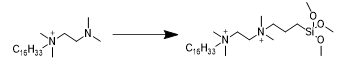
Scheme 2. Synthesis of secondary alkylated TMEDA (TMEDA-2)
Synthesis of MT resin modified with secondary quaternized TMEDA
Hexamethyldisiloxane (0,2 g, 0,3 ml, 0,0017 mol) methyltrimethoxysilane (1,5 g, 1,7 ml, 0,008 mol) (an excess of 5 times) and 2% TMEDA-2 (0,1 g, 0,00012 mol) were loaded into a double-necked flask with a magnetic stirrer, then anhydrous acetic acid (2,5 ml) and a catalytic amount of acetyl chloride were added. The mixture was heated to 100℃ under reflux and left to mix at this temperature for 24 hours. After the synthesis, the reaction mass was poured into a glass, toluene was added, sodium carbonate was added until the gas release stopped, then the mixture was dried with sodium sulfate. The inorganic precipitate was filtered out and evaporated from toluene. The resulting substance was studied by 1H nuclear magnetic resonance (NMR) spectroscopy.
1H NMR (250 MHz, ppm, CDCl3) δ: 1,36-1,19 (m, 26H, -CH2-CH2-CH2-), 0,89-0,84 (m, 3H , CH2-CH3), 0,21-0,04 (m, 3H , Si-CH3).
Obtaining coatings on metal
10x10 cm metal substrates were previously degreased with acetone and ethanol. To prepare a coating solution, 1 g of PDMS was mixed with an appropriate amount of MT-resin and dissolved in toluene. The resulting solution was applied with a spray gun to a prepared surface. Three types of coatings with different concentrations of the antibacterial agent were obtained (0,1%, 1%, 10%, 20%). The coatings were cured in a drying cabinet for 3 hours at a temperature of 150°C. Table 1 shows the compositions of the coatings obtained.
Table 1. Compositions of organosilicon coatings based on crosslinked MT resins*
# | 1 | 2 | 3 | 4 |
Content | МТ-resin (HMDS+MTEOS+TMEDA qw. С16) 10% + PDMS | МТ-resin (HMDS+MTEOS+TMEDA qw. С16) 20% + PDMS | МТ-resin (HMDS+MTEOS+TMEDA qw. С16) 1% + PDMS | МТ-resin (HMDS+MTEOS+TMEDA qw. С16) 0.1% + PDMS |
*HMDS - hexamethyl disiloxane; MTEOS - methyl triethoxysilane.
Results
Selection of Optimal Monomer Synthesis Conditions
To establish the optimal temperature regime of the TMEDA quaternization reaction, it was carried out in the temperature range of 80-130 °C. In this case, 3-chloropropyltriethoxysilane was used as an alkylating agent in a chloroform medium with a constant reaction time of 24 hours and a molar ratio of 1:1. The results of the dependence of the yield of the target product on temperature are shown in Table 2.
Table 2. Dependence of the product yield of the TMEDA quaternization reaction on the reaction temperature
№ | Temperature, °C | Yield of the product, % |
1 | 80 | 78 |
2 | 90 | 85 |
3 | 100 | 88 |
4 | 110 | 92 |
5 | 120 | 95 |
6 | 130 | 90 |
Thus, as a result of the experiments, a clear dependence of the monomer yield on the reaction temperature was established. The optimal temperature for the quaternization process is 120°C, as it ensures the maximum yield of the target product (95%).
The General Scheme of Obtaining Film
Figure 1 shows the diagrams of the experiments carried out in this work. Figure 1a schematically shows the chain of synthesis of MT resin containing biocidal fragments of QACs. The proposed resin structure is shown on the right, which consists of a branched silsesquioxane structure containing a certain number of silanol groups (l units). Thus, due to the presence of reactive silanol groups, the possibility of crosslinking MT resin with functionalized PDMS opens up due to the reaction of heterofunctional condensation between the silanol groups of MT resin and the APTES residues contained at the end of the PDMS chain. Figure 1b shows the stages of obtaining coatings. The first stage is the production of MT resin. The second stage is the manufacture of a compound for application. The third stage is the application of the compound on steel plates.
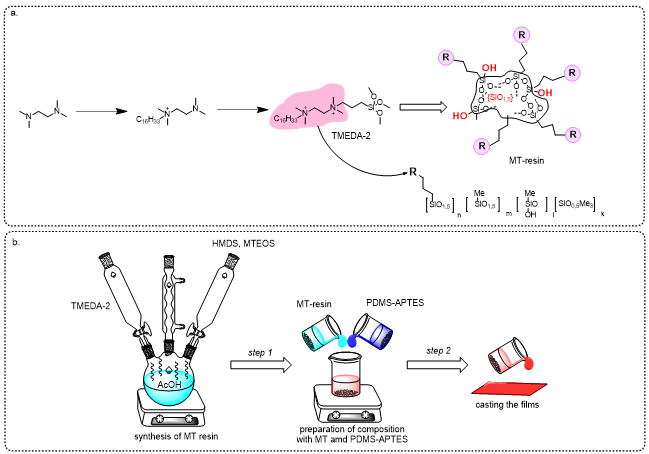
Figure 1. The general scheme of obtaining film: chemical scheme of synthesis of MT-resin (a); general techniques of film preparation (b).
Discussion
Dependence of Antifouling Properties on the Percentage of QACs
Based on the results of the study, it is possible to observe a clear dependence of the quality and antifouling properties of the coating on the percentage of the antibacterial agent (TMEDA-2). The quantitative data obtained is shown in Figure 2.
Figure 2 shows the plates: (a) coatings before testing; (b) immediately after 12 months of exposure in the sea; (c) after cleaning with a water jet. These images demonstrate the self-polishing properties of the coatings. Specifically, Sample 1 was easily cleaned of biofouling after one year in the marine environment.
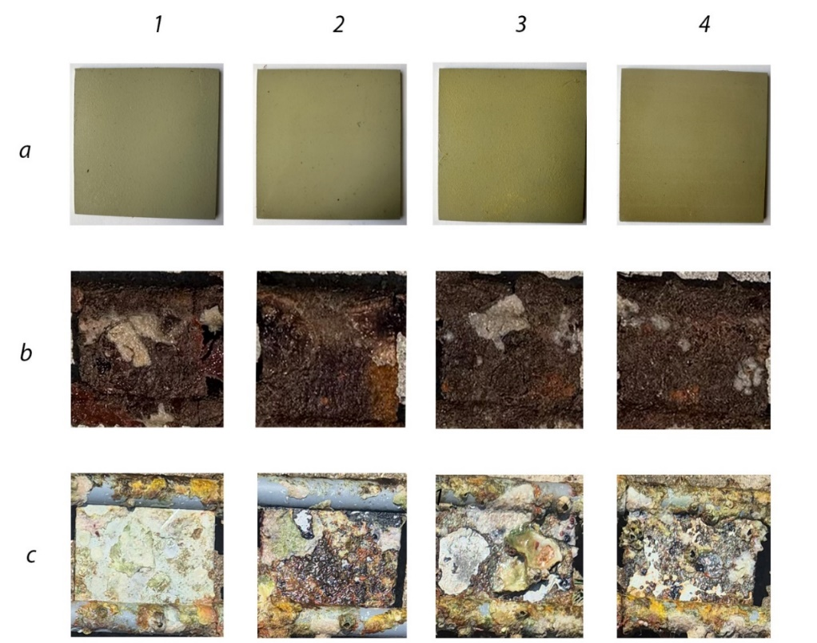
Figure 2. Initial plates before exposure with different active biocide content (a); after 1 year of exposure (b) and after washing with water pressure (c).
Surface Morphology
Sample 1 was examined using scanning electron microscopy (SEM) after a year in the tropical waters of Vietnam. Elemental analysis (EDS) (Figure 3) of the coating revealed the preservation of nitrogen content of ~10 atom.%.
This indicates that the antibacterial agent was not washed during long-term operation and remained in the polymer matrix. Thus, the coating retains its antifouling properties after a year of operation, which indicates its durability.
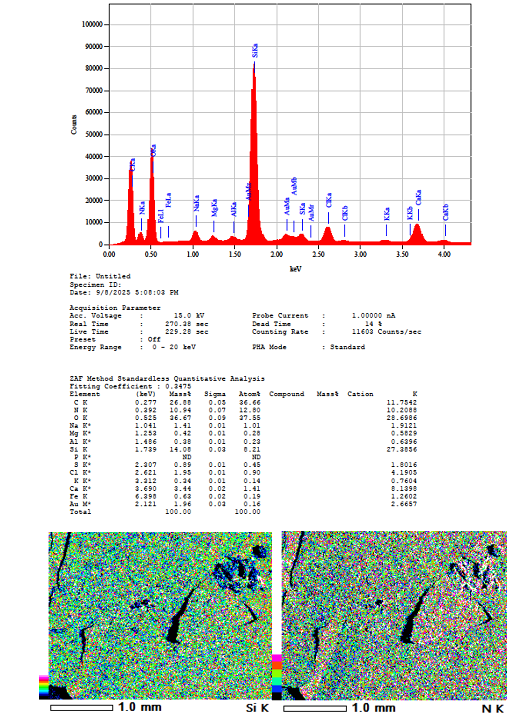
Figure 3. Elemental composition and morphology of the surface of sample 1 according to SEM data.
Conclusion
Antifouling coatings were obtained by copolymerization of an antibacterial agent and a polymer matrix. The antibacterial agent synthesized by us was an organosilicon derivative of the quaternary salt of TMEDA, from which MT resin was subsequently obtained. We have developed a technique for applying an antifouling coating using a spray gun. Based on field tests, it was found that the optimal content of the antibacterial agent in the coating is 20%. In addition, the EDS analysis confirmed that the coating retains its antibacterial properties after a year of operation at sea. The detection of nitrogen in the coating after long-term exposure indicates the resistance of the biocidal fragment to leaching, which is a necessary condition for maintaining antifouling properties throughout the entire service life of the coating.
Acknowledgements: This work has been done with the aid of Ministry Science and Education of Russian Federation and Joint Vietnam-Russia Tropical Science and Technology Research Center (project Ecolan T-1.1.7).
Statement on the Use of Generative AI: The authors affirm that no generative AI tools were used to create or modify the scientific content of this manuscript. All analyses, interpretations, and conclusions are entirely the work of the authors.
Author contributions: Shagidanova M. designed the experiments, performed data analysis, and drafted the manuscript; Shkinev P. carried out the experimental work; Kholoshenko I. carried out the experimental work; Tran D. Vu provided technical assistance and experimental support; Drozdov F. performed administrative work, finalized manuscript formation.
Conflicts of interest statement: The authors declare no conflicts of interest.
References
Brzozowska, A. M., Maassen, S., Lamers, R. J. A. N., de Vos, W. M., Kleijn, J. M., Stuart, M. A. C., Detty, M. R., Kuipers, O. P., & Zuilhof, H. (2014). Biomimicking micropatterned surfaces and their effect on marine biofouling. Langmuir, 30(40), 12121-12134. https://doi.org/10.1021/la502006m
Chambers, L. D., Stokes, K. R., Walsh, F. C., & Wood, R. J. K. (2006). Modern approaches to marine antifouling coatings. Surface and Coatings Technology, 201(6), 3642-3652. https://doi.org/10.1016/j.surfcoat.2006.08.129
Chen, L., Duan, Y., Du, M., Shen, H., Liu, Y., & Zhao, X. (2021). Biomimetic surface coatings for marine antifouling: Natural antifoulants, synthetic polymers and surface microtopography. Science of the Total Environment, 766, Article 144469. https://doi.org/10.1016/j.scitotenv.2020.144469
Dipak, A., Kondaveeti, S., Saratale, G. D., Saratale, R. G., Shobana, S., Kim, S.-H., & Kumar, G. (2021). Effect of membrane biofouling on the performance of microbial electrochemical cells and mitigation strategies. Bioresource Technology Reports, 15, Article 100822. https://doi.org/10.1016/j.biteb.2021.100822
Egghe, T., Morent, R., Hoogenboom, R., & De Geyter, N. (2023). Substrate-independent and widely applicable deposition of antibacterial coatings. Trends in Biotechnology, 41(1), 63-76. https://doi.org/10.1016/j.tibtech.2022.06.003
Fusetani, N. (2004). Biofouling and antifouling. Natural Product Reports, 21(1), 94-104. https://doi.org/10.1039/B302231P
Haldar, J., Kondaiah, P., & Bhattacharya, S. (2005). Synthesis and antibacterial properties of novel hydrolyzable cationic amphiphiles: Incorporation of multiple head groups leads to impressive antibacterial activity. Journal of Medicinal Chemistry, 48(11), 3823-3831. https://doi.org/10.1021/jm049106l
Kamensky, K., Hellum, A., Mukherjee, R., Naik, A., & Moisander, H. (2020). Underwater shear-based grooming of marine biofouling using a non-contact Bernoulli pad device. Biofouling, 36(8), 951-964. https://doi.org/10.1080/08927014.2020.1834539
Kirschner, C. M., & Brennan, A. B. (2012). Bio-inspired antifouling strategies. Annual Review of Materials Research, 42, 211-229. https://doi.org/10.1146/annurev-matsci-070511-155012
Li, Y., & Sun, S. (2022). Multilayer-coated hydrogel membranes with comprehensive fouling resistance and stability for wastewater treatment. Journal of Industrial and Engineering Chemistry, 105, 134-141. https://doi.org/10.1016/j.jiec.2022.07.001
Luan, Y., Liu, S., Pihl, M., van der Mei, H. C., Liu, J., Hizal, F., Choi, C.-H., Chen, H., Ren, Y., & Busscher, H. J. (2018). Bacterial interactions with nanostructured surfaces. Current Opinion in Colloid & Interface Science, 38, 170-189. https://doi.org/10.1016/j.cocis.2018.10.007
Muadtrap, M., Thiramanas, R., & Crespy, D. (2025). Amphiphilic materials for advanced antifouling and anticorrosion coatings. Progress in Organic Coatings, 207, Article 109391. https://doi.org/10.1016/j.porgcoat.2025.109391
Rittschof, D. (2010). Research on environmentally benign antifouling coatings. In S. Dürr & J. C. Thomason (Eds.), Biofouling (pp. 396-409). Wiley-Blackwell.
Spettel, M., Pollice, R., & Schnürch, M. (2017). Quaternary ammonium salts as alkylating reagents in C-H activation chemistry. Organic Letters, 19(16), 4287-4290. https://doi.org/10.1021/acs.orglett.7b01946
Vishwakarma, V. (2019). Impact of environmental biofilms: Industrial components and its remediation. Journal of Basic Microbiology, 59(3), 198-206. https://doi.org/10.1002/jobm.201900569
Wang, L.-C., Yuan, B., & Zhang, L.-W. (2025). Research progress of environmentally friendly degradable marine antifouling coatings. Journal of Ocean Engineering and Science. Advance online publication. https://doi.org/10.1016/j.joes.2025.08.011
Yang, Z., He, X., Lou, T., Su, D., Bai, X., & Yuan, C. (2024). Fabrication of dual functional marine antifouling coatings by infusing epoxy silicone oil modification of quaternary ammonium. European Polymer Journal, 210, Article 112947. https://doi.org/10.1016/j.eurpolymj.2024.112947
Yebra, D. M., Kiil, S., & Dam-Johansen, K. (2004). Antifouling technology: Past, present and future steps towards efficient and environmentally friendly antifouling coatings. Progress in Organic Coatings, 50(2), 75-104. https://doi.org/10.1016/j.porgcoat.2003.06.001
Zhang, C., Sun, J., Zhang, L., Wang, X., & Zhao, H. (2023). Anti-marine biofouling adhesion performance and mechanism of PDMS fouling-release coating containing PS-PEG hydrogel. Marine Pollution Bulletin, 194, Article 115345. https://doi.org/10.1016/j.marpolbul.2023.115345